

NEWS
ニュース
【教育学科】教員インタビュー シュミット・ケネス教授(中等教育専攻・英語科コース担当)
教育学科中等教育専攻英語科コースでさまざまな英語の授業を担当しているシュミット教授にインタビューを行いました。
1. Could you tell us about your area of expertise and your current research themes?
For many years, my central focus has been on level-appropriate extensive reading (多読) and listening (多聴) as sustainable paths to second language fluency. I’m also very interested in communicative task design and helping students use online tools (i.e., machine translation and AI chatbots) to enhance, rather than short-circuit, language development.
1. 先生のご専門と研究テーマは何ですか?
長年にわたり私の研究の核となっているのは、第2言語を流暢に操るための持続可能なアプローチとしての、レベルに応じた「多読(extensive reading)」と「多聴(extensive listening)」です。また、コミュニケーションを促すタスクのデザインや、学生が言語習得を「楽に済ませる(ショートカットする)」ためではなく、自らの言語能力を「高める」ために機械翻訳やAIチャットボットなどのオンラインツールをどのように活用できるか、ということにも強い関心を持っています。
2. Could you tell us about the classes you are currently teaching?
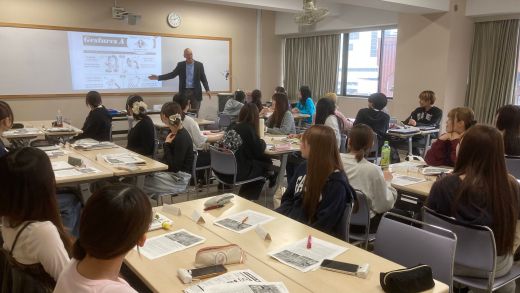
I teach 英語I and 英語II as part of our general education curriculum. I enjoy working with students from different departments with varying interests and goals.
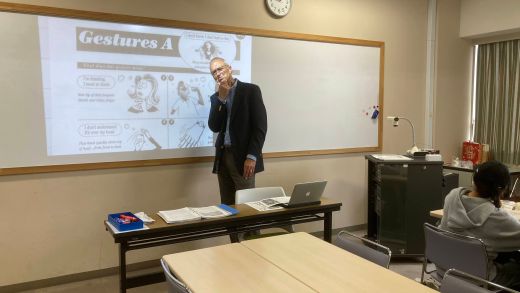
I teach Academic Reading for future English teachers. In this course, we focus on extensive reading as a sustainable source of engaging comprehensible input and a resource for in-class communication, and we examine how we can facilitate extensive reading (and listening) among our future students.
In my English Project course, students plan and carry out their own projects on a variety of topics—all completed in English. We meet weekly to communicate and share ideas, and the term ends with final project presentations.
Global Communication II is an EMI (English Medium of Instruction) course focusing on cross-cultural communication and understanding. Japanese students and international students work together—exploring the topic, sharing their related thoughts and experiences, and hopefully building their understanding of themselves and each other.
2. 現在担当している授業について教えてください。
全学共通教育(教養教育)科目の「英語I」と「英語II」を担当しています。それぞれ異なる興味や目標を持った、多様な学科の学生たちと授業を作るのはとても刺激的で楽しい時間です。
また、将来英語教員を目指す学生向けに「Academic Reading」も担当しています。このコースでは、持続可能で興味深い「理解可能なインプット(comprehensible input)」の源、そしてクラス内コミュニケーションの土台として多読に焦点を当て、将来自分たちの生徒にどのように多読・多聴を促していけばよいかを考察します。
「English Project」という授業では、学生が様々なテーマについて自らプロジェクトを企画・実行します。これらはすべて英語で行われます。毎週の授業でアイデアを共有し、学期の最後には最終プロジェクトのプレゼンテーションを行います。
「Global Communication II」は、すべての講義を英語で行うEMI(English Medium of Instruction)の科目で、異文化コミュニケーションや異文化理解に焦点を当てています。日本人学生と留学生が共に学び、テーマを深く掘り下げ、それぞれの考えや経験を分かち合うことで、自分自身や互いへの理解を深めていくことを目指しています。
3. You incorporate various English learning methods into your curriculum, such as activities at LCSR(Language & Cross-Cultural Studies Support Room) and extensive reading. Could you share with us the appeal of extensive reading in English education?
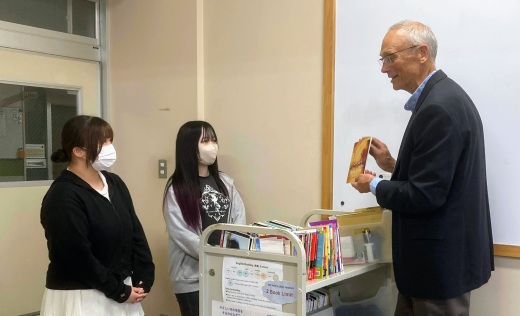
Much of the grammar and vocabulary study our students have done has little meaning unless that knowledge is employed to help them access massive amounts of comprehensible input (through reading, listening and interaction) over a long period of time. This is how we actually acquire the language and develop fluency. Extensive reading (ER) with level-appropriate graded readers (novels, short stories, nonfiction, etc.) allows students to gain the input they need as they enjoy interesting stories and learn about the world. Rewarding experiences like this provide fodder for in-class communication and make ER a sustainable learning strategy students can continue using far into the future.
3. 先生は語学・異文化学習支援室(Language & Cross-Cultural Studies Support Room)での活動や多読など、様々な英語学習法を多く取り入れていますが、英語教育における多読の魅力を教えてください。
学生たちがこれまで積み重ねてきた文法や語彙の学習は、長期間にわたり大量の理解可能なインプット(読書、リスニング、対話など)に触れるために活用されなければ、ほとんど意味がありません。これこそが、私たちが実際に言語を習得し、流暢さを育むプロセスなのです。 自身のレベルに合った「グレーディッド・リーダーズ(語彙制限本:小説、短編物語、ノンフィクションなど)」を用いた多読(ER)は、面白いストーリーを楽しみ、世界について学びながら、必要なインプットを得ることができます。このような充実した体験は、クラスでのコミュニケーションの原動力となり、多読が将来にわたってずっと続けられる持続可能な学習戦略となるのです。
4. What do you hope students will learn or experience during their time at university?
I want students to be able to look back on their university days and say, without regret, “That time was really well spent.” To me, that means grabbing opportunities to develop knowledge and understanding, to gain experiences (clubs and circles, volunteer activities, part-time work, practical training, travel, etc.), and to build significant relationships. These things will have lasting impact on their own lives, and on society through them. My years at university were, and remain, a lasting treasure in my life, and I hope my students can feel the same.
4. 学生には大学でどのようなことを学んでほしいと考えていますか?
学生たちには、大学生活を振り返ったときに「あの時間は本当に充実していた」と、悔いなく言えるようになってほしいと思っています。私にとってそれは、知識や理解を深める機会、様々な経験(部活・サークル、ボランティア活動、アルバイト、実習、旅行など)を重ねる機会、そしてかけがえのない人間関係を築く機会を積極的に掴むことを意味します。これらの経験は、彼ら自身の人生、そして彼らを通じて社会全体に、長く良い影響をもたらすはずです。私自身の大学時代は今でも人生の宝物であり、学生たちにも同じように感じてもらいたいと願っています。
5. Finally, do you have a message for high school students who want to become junior high or high school English teachers?
Come ready to learn and try new things. Appreciate, but don’t be a prisoner of your previous English teachers and learning experiences. Understand the differences between learning about a language (explicit study of grammar, vocabulary, etc.) and actually acquiring a language (through comprehensible, meaning-centered input). Appreciate how they are related, and think hard about your goals and the relative time you (and your future students) should spend on each. Committing yourself to exploring these and other issues in language education and to building your own language skills will be a great start toward serving your future students.
5. 最後に、英語教員を目指す高校生の皆さんへメッセージをお願いします。
新しいことを学び、挑戦する意欲を持って大学に来てください。自分がこれまで出会った英語の先生や学習経験に感謝しつつも、決してそれだけに囚われないでください。言語について学ぶこと(文法や語彙などの明示的な学習)と、実際に言語を習得すること(意味中心の、理解可能なインプットを通じて)の違いを理解してほしいと思っています。この両者がどのように結びついているかを捉え、自分の目標や自分自身(そして将来の生徒たち)がそれぞれにどれだけの時間を割くべきか真剣に考えてみてください。言語教育におけるこうした課題やその他の問題を探究し、自分自身の語学力を磨くことに全力を尽くすことは、将来出会う生徒たちのためになる、素晴らしい第一歩となるでしょう。
この記事に関するお問い合わせ
- 教務部教務課
- 住所:〒981-8522
宮城県仙台市青葉区国見1−8−1 - TEL:022-717-3315
- FAX:022-301-1280
- E-Mail:kyomu@tfu.ac.jp